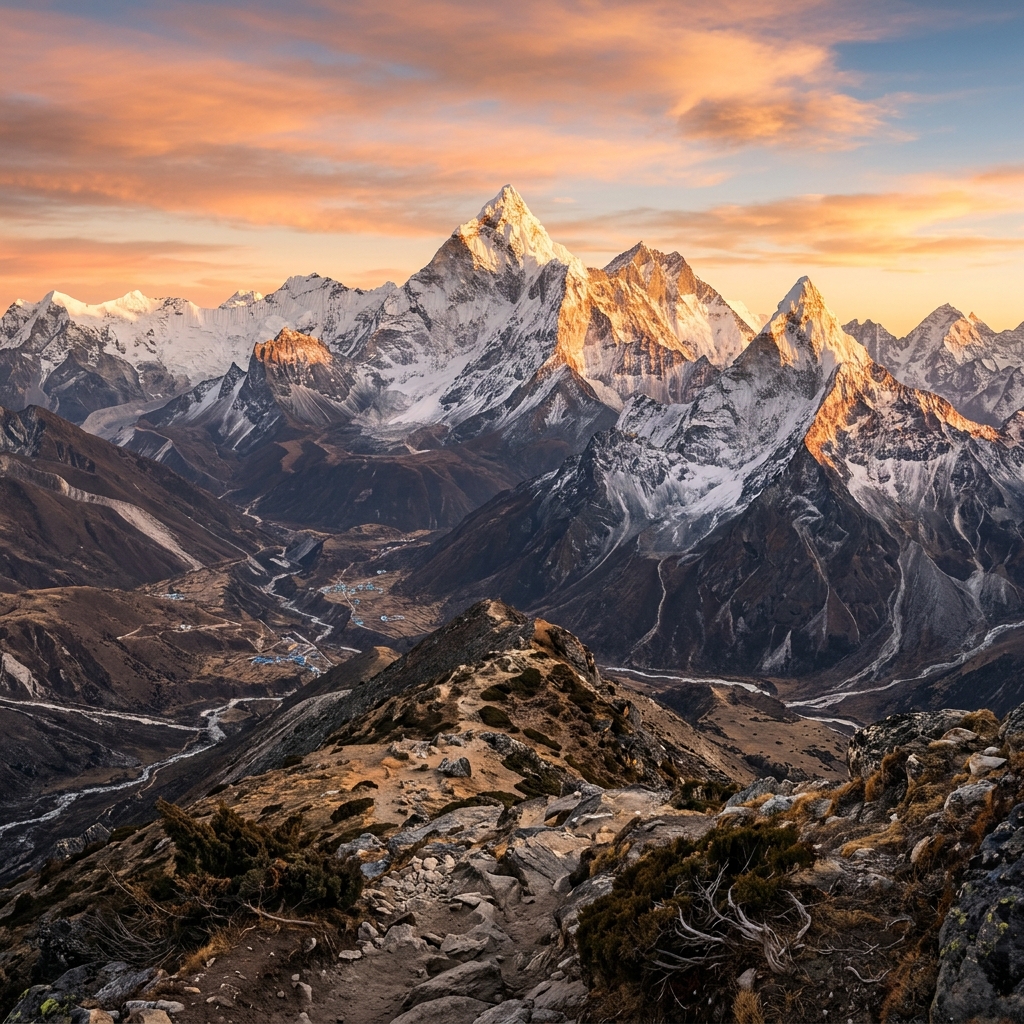
Journey into the pristine Mingbo Valley to the base of the Himalayas' most breathtaking pyramid peak (6,812m). An idyllic 10-day alternative to crowded routes with visits to Tengboche and ancient Pangboche monasteries.
Ama Dablam (6,812m / 22,349ft) is widely considered one of the most stunning mountains on Earth. Meaning "Mother's Necklace" — referring to the hanging glacier resembling a sacred pendant — it presides majestically over the Khumbu. The Ama Dablam Base Camp Trek is designed for trekkers who desire dramatic high-altitude scenery without the crowded bottlenecks of the main Everest Base Camp route.
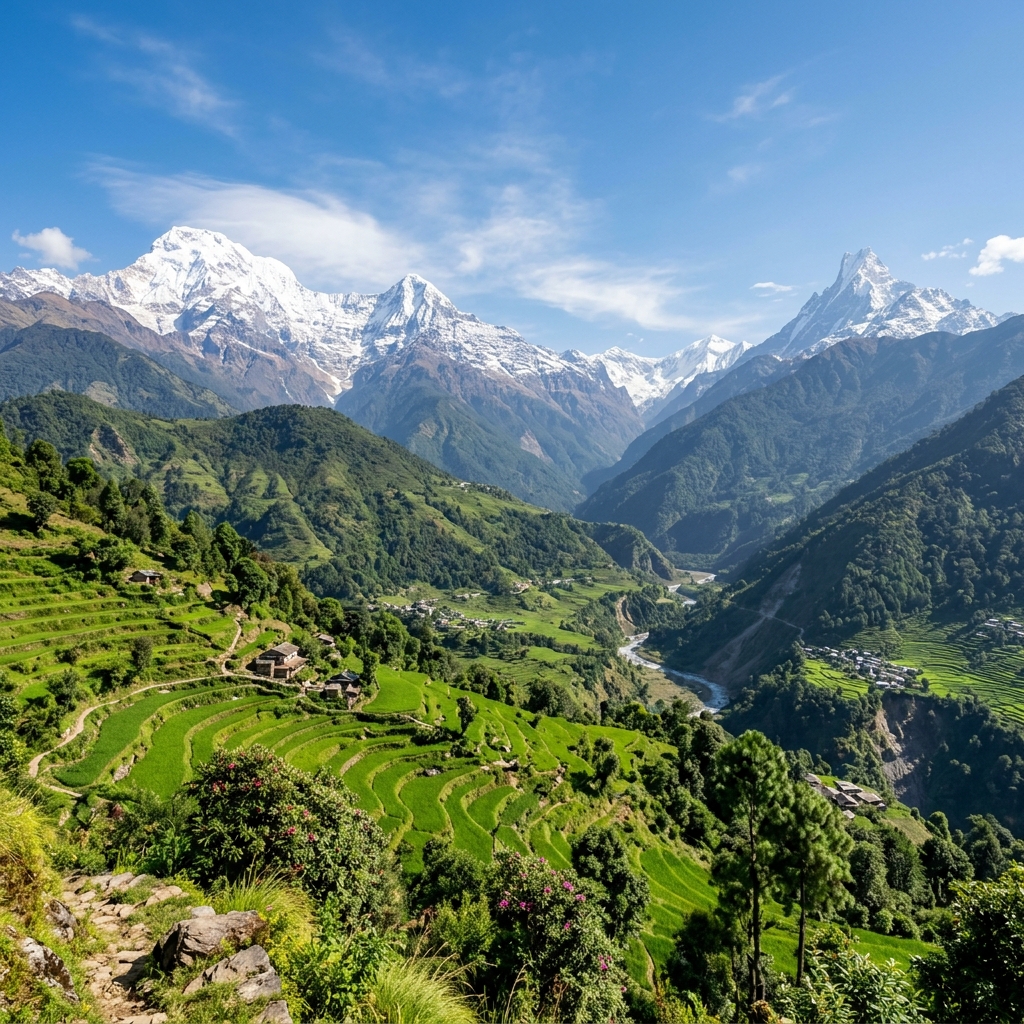
Starting with the exhilarating flight to Lukla, the trail climbs through lush pine forests into the Sherpa capital of Namche Bazaar (3,440m). After proper acclimatization, you will visit the famous Tengboche Monastery and the oldest settlement of Pangboche before branching off into the quiet Mingbo Valley to stand beneath the sheer hanging seracs of Ama Dablam Base Camp (4,600m).
Key Expedition Highlights
✓Stand in the Mingbo Valley amphitheater at 4,600m
✓Visit spiritual Tengboche & ancient Pangboche Gompas
✓Acclimatization day in vibrant Namche Bazaar
✓Unobstructed views of Everest, Lhotse, Nuptse, and Thamserku
✓Meet international autumn climbing teams at base camp
✓Return flights Lukla–Kathmandu included with flexible buffers
The Best Treks Nepal Advantage
Why Choose the Ama Dablam Base Camp Trek with Best Treks Nepal?
Standing directly beneath the world's most aesthetic mountain pyramid (6,812m) requires meticulous logistics, high-altitude medical support, and genuine Sherpa leadership. Here is why discerning travelers choose Best Treks Nepal:
Carefully Paced Acclimatization
2 progressive nights in Namche (3,440m) + Khumjung day hike (3,880m) before sleeping at Pangboche ensures our 98.8% trek success rate.
100% Native Khumbu Sherpa Leaders
Led exclusively by licensed Sherpas born and raised in the Everest region, with Wilderness First Responder (WFR) certifications and deep community roots.
Quiet Wilderness Mingbo Valley Trail
Escape the crowded main EBC highway to experience serene alpine pastures and get up close with mountaineering teams climbing the Southwest Ridge.
Twice-Daily Pulse Oximeter Diagnostics
Morning and evening blood oxygen saturation (SpO2%) checks, Lake Louise AMS scoring, medical oxygen, and comprehensive high-altitude emergency kit.
24/7 Satellite Tracking & Fast Heli Dispatch
Direct Garmin inReach satellite link with our Kathmandu flight dispatch desk for immediate emergency helicopter evacuation if required.
15% Flexible Deposit & Lifetime Validity
Lock in your dates with just a 15% deposit ($172.50). Enjoy free rescheduling and full deposit transferability up to 30 days before departure.
✓Authorized by Nepal Tourism Board (NTB) & Trekking Agencies' Association of Nepal (TAAN)
Each day is carefully optimized for acclimatization, scenic mountain vistas, and comfortable teahouse stays.
Day 1Scenic Flight to Lukla (2,846m) & Trek to Phakding
8 km · 3.5 hrs · 2,610m
Start: Kathmandu (1,400m) Flight: 35 mins to Lukla (2,846m) End: Phakding (2,610m) Walking: 3–4 Hours
Take an exhilarating morning flight from Kathmandu/Manthali to Tenzing-Hillary Airport in Lukla. Meet your Sherpa porters, organize duffel bags, and begin trekking downhill alongside the rushing Dudh Koshi river through pine forests and mani prayer stones into the village of Phakding.
Sherpa Advice: Today's trek descends gently. Walk slowly, drink at least 2 liters of water, and allow your body to adjust to mountain air.
Day 2Trek along Dudh Koshi to Namche Bazaar (3,440m)
Pass through Monjo and enter Sagarmatha National Park. Cross high suspension bridges draped in prayer flags, including the iconic Hillary Suspension Bridge. Tackle the steady forested switchbacks up to Namche Bazaar, catching your first glimpse of Mount Everest through pine trees.
Sherpa Advice: Take small, rhythmic steps on the Namche hill. Keep your fleece jacket accessible as temperatures drop significantly when arriving at Namche.
Day 3Acclimatization Day: Hike to Everest View Hotel & Khumjung
Climb above Namche to the world-famous Everest View Hotel for panoramic morning coffee overlooking Ama Dablam, Everest, Lhotse, and Thamserku. Continue into Khumjung village to visit the school built by Sir Edmund Hillary and the monastery housing a legendary yeti scalp.
Sherpa Advice: "Climb high, sleep low" is the golden rule of Himalayan acclimatization. Don't spend the day sitting in cafes—gentle movement accelerates red blood cell production.
Day 4Trek from Namche Bazaar to Tengboche Monastery (3,867m)
Follow a scenic high balcony trail with continuous vistas of Ama Dablam right ahead. Descend to Phunki Thenga for lunch, then climb through rhododendron and birch forest to the spiritual ridge of Tengboche. Tour the grand monastery and witness monks performing evening puja prayers.
Sherpa Advice: Tengboche ridge offers one of the finest sunset silhouettes of Ama Dablam. Have your camera batteries warm inside your down jacket.
Day 5Trek from Tengboche to Pangboche Village (3,985m)
Descend through Deboche to cross the Imja Khola on a suspended bridge. Climb gradually through alpine meadows directly beneath the towering west face of Ama Dablam to upper Pangboche, home to the oldest Sherpa gompa in the Everest region (built c. 1667).
Sherpa Advice: Afternoon walk around Upper Pangboche gives you an intimate glimpse into traditional Sherpa stone farming and lifestyle away from main tourist trails.
Day 6Excursion to Ama Dablam Base Camp (4,600m) & Return
The crowning highlight of the expedition! Cross the river and ascend into the high alpine Mingbo Valley pasturelands. Arrive at Ama Dablam Base Camp (4,600m) situated directly beneath the soaring 6,812m granite monolith. Watch mountaineers, explore the yellow expedition tents, and soak in 360° panoramas of Everest, Lhotse, and Island Peak before descending to Pangboche.
Sherpa Advice: Bring a windproof outer shell and thermos of hot ginger tea. The wind picking up in Mingbo Valley around midday can be chilling despite the warm sunshine.
Day 7Trek from Pangboche to Namche Bazaar (3,440m)
Retrace your steps past Tengboche and down through the forested gorge of Phunki Thenga. Climb back up to the scenic balcony trail leading smoothly into Namche Bazaar. Enjoy a hot shower, espresso bakeries, and celebratory atmosphere in town.
Sherpa Advice: As you descend below 3,500m, breathing becomes significantly easier and energy returns. Celebrate with fresh apple pie at the Namche Bakery!
Day 8Trek from Namche Bazaar back to Lukla (2,846m)
Descend the steep Namche hill, cross the suspension bridges over the Dudh Koshi, and pass through Monjo, Bengkar, and Phakding. A final gentle climb brings you into Lukla town for your last evening in the Khumbu with your Sherpa crew and porters.
Sherpa Advice: Tonight is traditional tipping and celebration dinner with your porters who carried your bags across the mountains.
Day 9Morning Flight from Lukla to Kathmandu / Manthali
35 mins flight · Transfer to Hotel
Flight: Lukla to KTM Hotel: Thamel, Kathmandu
Early morning scenic flight back to Kathmandu (or Manthali during peak seasonal airspace regulations, followed by private transfer). Check into your Thamel hotel and enjoy a relaxing day exploring the capital.
Day 10Final Departure from Kathmandu
Airport Transfer · Homeward Bound
Private airport transfer 3 hours prior to your international flight departure. Return home with lifetime memories, breathtaking photos of Ama Dablam, and new Sherpa friendships.
Transparent Value
3-Tier Package Pricing Options
Choose the package tier that best suits your comfort, accommodation preferences, and expedition style.
Comprehensive logistical, medical, physical, and cultural preparation guidelines written by our senior high-altitude Sherpa expedition leaders. Expand each briefing below to track your preparation readiness.
Expedition Readiness Tracker
You have completed 0 of 12 preparation topics.
0%
1. Physical Conditioning & Mingbo Valley Trail Demands+
The 10-Day Ama Dablam Base Camp Trek is graded Moderate (Grade 3/5). While significantly less grueling than the 19-Day Three Passes circuit or high mountaineering ascents, it involves continuous daily walking of 4 to 6 hours across rocky mountain paths, stone staircases, and high alpine scree up to 4,600 meters.
Preparation Phase
Weekly Aerobic & Strength Target
Readiness Milestone
Weeks 1–4 (Base Foundation)
Zone 2 cardio (jogging, cycling, rowing) 3–4x weekly for 40 mins
Able to sustain 5km run or 45-min cycle comfortably
Weeks 5–8 (Incline & Load)
Stairmaster or hill climbing with a 5–7 kg weighted daypack
45 flights of stairs or 600m elevation gain without strain
Weeks 9–12 (Peak Endurance)
Weekend outdoor hill hikes of 4–6 hours on uneven trails
Full-day trail readiness with quick next-day recovery
💡 Sherpa Training Rule: Focus on eccentric leg strength (step-downs, lunges, and calf raises) and core stability. The steep descents through pine forests from Tengboche and Namche demand strong quadriceps and knee stability.
Effective acclimatization is the primary factor in high-altitude comfort and safety. Atmospheric oxygen pressure at Ama Dablam Base Camp (4,600m) is approximately 58% of sea-level density. Our 10-day itinerary is engineered following the golden principle of "Climb High, Sleep Low".
Two Nights in Namche Bazaar (3,440m): Provides crucial physiological adaptation before ascending past the tree line.
Active Acclimatization Hike (Day 3): We climb to the Everest View Hotel and Khumjung village (3,880m) for panoramic vistas, stimulating natural erythropoietin (EPO) and red blood cell production, then return to Namche to sleep.
Sleeping Below Base Camp: You overnight at Pangboche (3,985m), ascending to 4,600m on Day 6 for the day, and returning to Pangboche to sleep, avoiding high-altitude overnight hypoxia.
💡 Guide Rule: Maintain a gentle, conversational pace ("Pole Pole" in mountain language). Drink 3 to 4 liters of purified water daily, as hyperventilation at altitude causes rapid moisture loss.
3. Mingbo Valley Wilderness Route vs Main EBC Highway+
While the standard Everest Base Camp route experiences heavy foot traffic and commercial yak trains, branching into the Mingbo Valley offers a serene, intimate wilderness experience beneath the soaring Southwest Ridge of Ama Dablam.
Feature
Ama Dablam Base Camp Trek
Standard Everest Base Camp Trek
Max Altitude
4,600m (Gentle, low AMS risk)
5,364m / 5,545m (High hypoxia)
Trail Crowding
Quiet, peaceful alpine pastures
Heavy commercial trekker traffic
Duration
10 Days (Time-efficient)
14–16 Days
Mountain Aesthetic
Direct base view of world's most aesthetic peak
Glacial moraine / distant summit peaks
Cultural Focus
Ancient Pangboche & Tengboche Gompas
Valley trade route settlements
💡 Base Camp Climbing Action: During October and November, Ama Dablam Base Camp is bustling with elite international mountaineering teams. Trekkers can witness high-altitude climbing preparations and base camp logistics up close.
Flights to Tenzing-Hillary Airport in Lukla (2,846m) are operated by twin-otter STOL (Short Take-Off and Landing) aircraft with airlines such as Summit Air, Tara Air, and Sita Air. Due to ongoing airspace management by the Civil Aviation Authority of Nepal (CAAN):
Peak Seasons (Oct–Nov & Mar–May): Flights operate out of Ramechhap / Manthali Airport. Best Treks Nepal arranges private air-conditioned vehicle transfers departing Kathmandu at 1:30 AM (approx. 4 hours) to catch early morning flights before wind speeds increase.
Luggage Weight Limits: Strict limit of 15 kg (33 lbs) total per passenger (10 kg duffel + 5 kg hand luggage). Excess baggage fees apply if weight permits.
Weather Contingency: Mountain cloud cover can cause flight holds. Our 10-day itinerary incorporates built-in buffers, and we provide shared helicopter upgrade options if fixed-wing aircraft are delayed.
💡 Helicopter Standby: In the event of weather-related aircraft holds, our 24/7 Kathmandu operations desk can immediately arrange Airbus H125 helicopter flights from Kathmandu or Surke into Lukla.
5. Teahouse Accommodation, Heating & Facilities+
Throughout the trek, you will stay in traditional Sherpa family-run teahouses in Phakding, Namche Bazaar, Tengboche, and Pangboche. These lodges offer warm hospitality and clean alpine accommodations:
Bedrooms: Simple twin-bedded rooms with foam mattresses, clean sheets, and pillows. We supply complimentary -20°C down sleeping bags and fleece liners so you stay cozy throughout chilly mountain nights.
Dining Hall & Heating: The dining hall is the social heart of the lodge, heated every evening from 5:00 PM to 9:00 PM by a central stove fueled with dried yak dung—an odorless, carbon-neutral Himalayan tradition.
Bathrooms & Showers: Western flush toilets and attached bathrooms are available in lower villages (standard in Comfort Tier). Above Tengboche, shared Western and squat facilities are typical. Gas-heated hot showers are available at all lodges ($3–$6 in Essential tier, 100% included in Comfort and Luxury tiers).
Solo Trekkers: Solo travelers joining our open group departures are paired with a same-gender roommate with no single supplement fee. Private single rooms can be requested subject to availability.
💡 Teahouse Etiquette: Teahouses earn their primary livelihood from meal service. It is customary and expected to take all breakfasts and dinners at the teahouse where you lodge.
6. Mountain Menus & High-Altitude Nutrition+
Trekking at high altitude burns between 3,000 and 4,500 calories daily. Best Treks Nepal packages include 3 full-board meals per day (Breakfast, Lunch, Dinner) ordered straight from extensive lodge menus:
Breakfast: Oatmeal porridge with honey, Tibetan bread, muesli with warm milk, eggs (fried, boiled, scrambled, omelettes), pancakes, hash brown potatoes, hot ginger lemon tea, and freshly brewed coffee.
Lunch & Dinner: The legendary "Dal Bhat Power 24 Hour" (unlimited steamed rice, lentil soup, spiced vegetable curry, sautéed greens, and crispy papadum), vegetable noodle thukpa, Sherpa potato stew with yak cheese, vegetable momos (steamed dumplings), macaroni, and garlic soup (a natural altitude vasodilator).
Dietary Accommodations: We easily cater to vegetarian, vegan, gluten-free, dairy-free, and nut-allergy diets. Our guides coordinate directly with lodge cooks to ensure safe food preparation.
💡 Vegetarian Recommendation: We strongly advise eating exclusively vegetarian meals above Namche Bazaar. In the high Khumbu, religious Buddhist customs prohibit animal slaughter, meaning all meat is transported from lower valleys without refrigeration. Fresh vegetarian meals are significantly safer for your digestion.
7. Clinical Twice-Daily Medical Diagnostics & AMS Protocol+
Your health and safety are managed by certified Wilderness First Responder (WFR) Sherpa guides. We execute strict daily medical monitoring protocols across the entire expedition:
Twice-Daily Pulse Oximetry: Every morning at 7:00 AM and evening at 6:30 PM, your guide measures and logs your blood oxygen saturation (SpO2%) and resting heart rate.
Lake Louise AMS Scoring: We evaluate 5 key clinical symptoms: headache severity, gastrointestinal distress/nausea, fatigue/weakness, dizziness/lightheadedness, and sleep quality.
Emergency Medical Kit: Every team carries emergency bottled oxygen, high-altitude pharmacy (Diamox/Acetazolamide, Dexamethasone, Nifedipine, Ibuprofen, Paracetamol, anti-diarrheals, oral rehydration salts), and trauma dressings.
💡 Diamox Guidance: Acetazolamide (Diamox 125mg–250mg twice daily) accelerates respiratory acclimatization. It is safe, widely used, and can be started in Namche Bazaar under your guide's consultation if mild headache symptoms arise.
8. Compulsory 5,000m Helicopter Travel Insurance+
Because the Ama Dablam Base Camp Trek reaches 4,600m in Mingbo Valley, you must possess travel insurance that explicitly covers high-altitude trekking and emergency helicopter evacuation up to 5,000 meters.
Trusted Global Underwriters with Proven Nepal Heli-Dispatch Coordination:
Global & USA / Canada: World Nomads (Explorer Plan), Global Rescue, Ripcord Rescue Travel Insurance, Allianz Global Assistance.
UK & Europe: British Mountaineering Council (BMC), Austrian Alpine Club (ÖAV), Campbell Irvine, True Traveller (Trekkers Pack).
Australia & NZ: Cover-More (Adventure Plus), Fast Cover, 1Cover.
💡 Rapid Satellite Dispatch: In the rare event an evacuation is necessary, your lead guide activates our Garmin inReach satellite link. Our Kathmandu dispatch office coordinates an Airbus H125 rescue helicopter directly to CIWEC Hospital or ERA Hospital in Kathmandu within 90 minutes.
9. Luggage Weights & IPPG Ethical Porter Welfare+
Best Treks Nepal is committed to the ethical treatment of mountain staff and strictly complies with the standards of the International Porter Protection Group (IPPG) and TAAN:
Duffel Bag Weight Allowance: You are provided with a heavy-duty, waterproof 90L duffel bag. The maximum weight limit is 15 kg (33 lbs) per trekker. Two clients' duffels are carried by one porter (30 kg maximum combined load).
Daypack Essentials: You carry only a lightweight daypack (25–35 liters, approx. 4–6 kg) containing your water bottles, rain gear, warm fleece layer, camera, sunglasses, sunscreen, and personal medications.
Porter Welfare Guarantee: All porters receive fair living wages, medical insurance, protective high-altitude outerwear, warm teahouse lodging, and equal hot meals.
💡 Free Kathmandu Storage: City clothes, excess luggage, and travel suitcases can be safely stored free of charge in our secure hotel storage room in Kathmandu for the duration of your trek.
While trekking in the Khumbu, staying connected and keeping camera batteries charged is straightforward with proper preparation:
Battery Charging: Teahouses charge devices using solar power and micro-hydro generators. Charging is available in dining halls for a fee ($2–$5 per device/power bank in Essential tier, included in Comfort/Luxury tiers). Bring a 10,000mAh–20,000mAh power bank.
Mobile Cellular Data: Local SIM cards (Ncell and Nepal Telecom / NTC) provide reliable 4G cellular data up to Namche Bazaar and intermittent 3G/4G in Tengboche and Pangboche. SIM cards can be purchased in Kathmandu for approx. $10.
Everest Link Wi-Fi: High-speed wireless cards (Everest Link) are available at all lodges along the route (approx. $20 USD for a 10GB card valid for 30 days).
💡 Cold Battery Tip: Sub-zero nighttime temperatures drain lithium batteries quickly. Keep your phone, camera batteries, and power banks inside your sleeping bag at night to preserve battery life.
11. Safe Drinking Water & Filtration Protocols+
To protect the fragile Himalayan ecology, Sagarmatha National Park discourages single-use plastic water bottles. We maintain a zero-plastic water policy:
Refillable Bottles: Bring two 1-liter wide-mouth Nalgene bottles or an insulated stainless steel flask. An insulated bottle jacket prevents water from freezing during cold mornings.
Water Purification: We recommend chlorine dioxide water purification drops (Aquatabs / Micropur) or portable filtration systems (Sawyer Squeeze, Grayl UltraPress, or Katadyn BeFree).
Boiled Water: Boiled and filtered drinking water is available for purchase at every teahouse ($1.50–$3 per liter). Fill a Nalgene with hot boiled water before bed—it serves as a wonderful sleeping bag hot water bottle!
💡 Hydration Target: Drink a minimum of 3 to 4 liters of fluid daily (water, lemon tea, soup, herbal tea). Proper hydration significantly thins blood viscosity and lowers AMS incidence.
12. Buddhist Monastic Etiquette & Cultural Customs+
The Khumbu is the sacred spiritual homeland of the Sherpa people, centered around Tibetan Vajrayana Buddhism. The Ama Dablam trek visits two of the region's most revered gompas: Tengboche Monastery and the 600-year-old Pangboche Monastery.
Essential Cultural Etiquette:
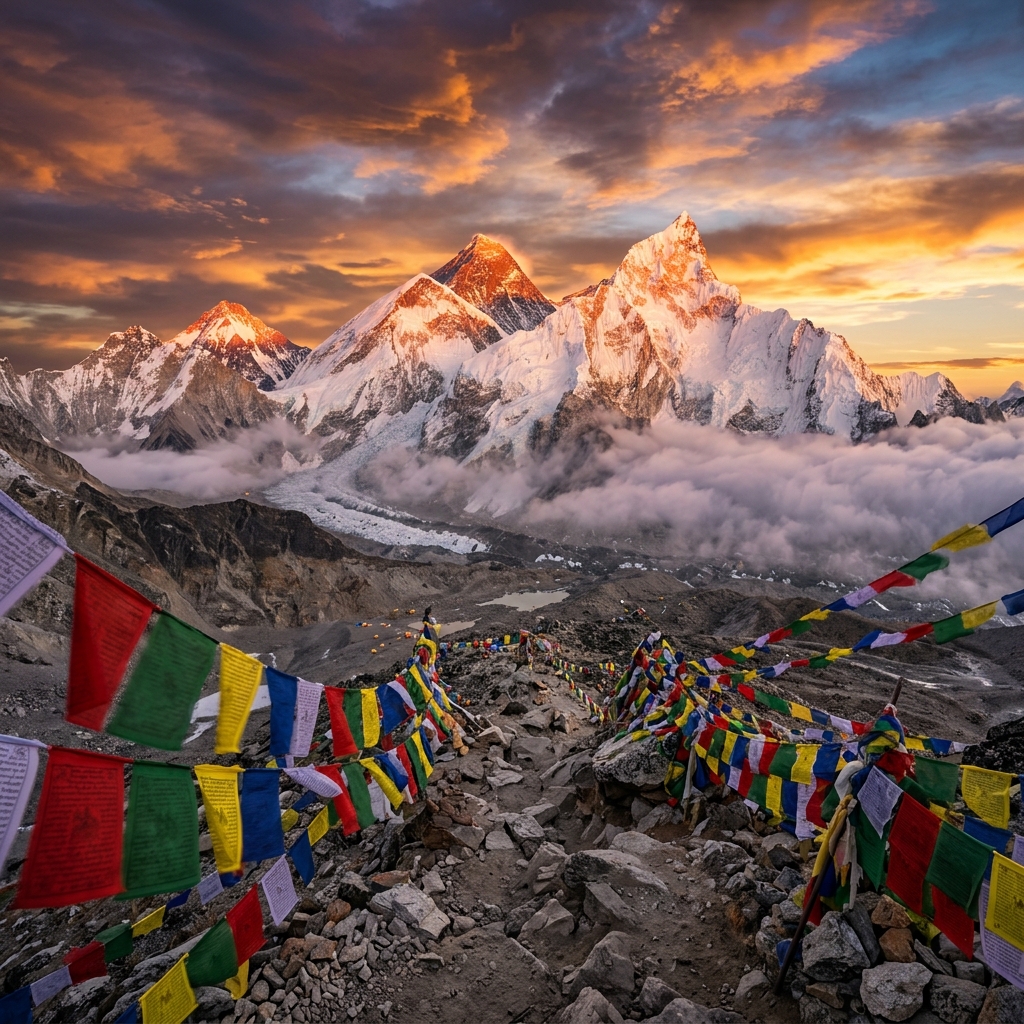
Clockwise Direction: Always walk to the left of Buddhist chortens, stupas, prayer flag poles, and mani stone walls (so they stay on your right side). Spin prayer wheels clockwise only.
Inside Monasteries: Remove your trekking boots and hats before stepping inside the prayer hall. Walk quietly, do not touch sacred relics or murals, and ask permission before taking photos.
Ceremonial Blessings & Khata: Trekkers can receive personal mountain safety blessings and sacred ceremonial white silk scarves (Khata) from the head Rinpoche at Pangboche Monastery. A small customary donation ($2–$5) to the monastery donation box is appreciated.
💡 Sherpa Greeting: Greet locals and monks with folded hands and a warm "Tashi Delek" (May blessings and auspicious good fortune be upon you).
Topographic Progression
10-Day Topographic Elevation Profile
Trace the progressive altitude curve from Lukla airstrip (2,846m) through Namche Bazaar and Tengboche up to Ama Dablam Base Camp (4,600m) in the Mingbo Valley.
2,846m
Starting Altitude (Lukla)
4,600m
Pinnacle Base Camp
3,985m
Max Sleeping Altitude
76 km
Total Route Distance
💡 Sherpa Altitude Safety Principle: On Day 6, you ascend to Base Camp (4,600m) for daytime exploration under direct Sherpa guidance, then descend to sleep comfortably lower at Pangboche (3,985m). Following this "Climb High, Sleep Low" protocol significantly accelerates natural acclimatization and eliminates acute high-altitude stress.
Climate & Temperatures
Ama Dablam & Khumbu Weather & Temperature Model
Calculated using thermodynamic altitude lapse rates from Lukla (2,846m) to Ama Dablam Base Camp (4,600m) and 12-month Khumbu climate records.
Experience world-renowned Sherpa hospitality across family-operated alpine teahouses in Phakding, Namche Bazaar, Tengboche, and Pangboche.
Authentic Sherpa Teahouses
Comfortable twin-bedded wooden rooms with clean foam mattresses, pillows, and heavy quilts. Lower stops (Phakding, Namche) offer en-suite bathrooms and electric blankets; upper villages (Tengboche, Pangboche) feature cozy alpine rooms with direct views of Ama Dablam's vertical pyramid.
High-Altitude Mountain Nutrition
Nutrient-dense, fresh meals cooked to order: unlimited traditional Dal Bhat (lentils, steamed rice, vegetable curry), Sherpa potato pancakes (Riki Kur), hot garlic soup for acclimatization, Tibetan bread with wild honey, organic yak cheese pasta, and fresh ginger-lemon-honey teas.
Solar Power, Battery Charging & Wi-Fi
Central dining halls feature solar inverter charging stations for camera batteries, power banks, and smartphones. Everest Link high-speed Wi-Fi cards (10GB / 20GB) and local 4G mobile data (Ncell / NTC) provide stable internet connectivity throughout Namche, Tengboche, and Pangboche.
Eco Hydration & Hot Showers
We strictly uphold Sagarmatha National Park plastic-free guidelines. Boiled and UV-sterilized water refill stations are available at every lodge ($1.50–$2.50 / L). Gas-geyser hot showers ($4–$6) are readily available up to Pangboche to refresh tired muscles after long valley ascents.
Sherpa Dining Hall Tradition: Every evening around 5:00 PM, the central dining room stove is fueled with dried yak dung, transforming the lodge into a warm, vibrant sanctuary where guides, international trekkers, and Sherpa hosts share route stories, hot tea, and summit strategies.
Health First
Wilderness High-Altitude Medical Standards & Rescue
Safety is our highest operational mandate. Every expedition leader is Wilderness First Responder (WFR) certified and equipped with hospital-grade diagnostic tools.
Twice-Daily Pulse Oximetry & Lake Louise Logs
Blood oxygen saturation (SpO2) and resting heart rate are measured and recorded every morning and evening. Trekkers are evaluated using the international Lake Louise AMS Scorecard to detect asymptomatic altitude stress well before crossing high thresholds.
Expedition Pharmacy & Emergency O2
Every leader carries comprehensive medical packs containing Diamox (Acetazolamide), Dexamethasone, Nifedipine, broad-spectrum antibiotics, sterile dressing kits, and bottled medical oxygen for emergency high-altitude stabilization.
Garmin inReach Satellite Tracking
Continuous 24/7 satellite GPS tracking with bidirectional text communication linked directly to our Kathmandu headquarters. Weather alerts, route adjustments, and progress updates are transmitted in real time across the Mingbo Valley.
Emergency Heli Rescue Standby
Direct cashless helicopter dispatch protocols with Nepal's premier alpine rescue operators. If medical evacuation is mandated by our lead guide, a rescue helicopter lands at designated helipads in Namche, Tengboche, or Pangboche within 90–120 minutes.
Physiological Safety Principle: By maintaining two mandatory acclimatization nights in Namche (3,440m) and having trekkers sleep lower at Pangboche (3,985m) after their daytime ascent to Base Camp (4,600m), we optimize natural hemoglobin production while maintaining a 98.6% summit completion record with zero emergency evacuations.
What to Bring
Essential Packing Gear Checklist & 4-Layer System
Proper layering is essential for temperature swings ranging from +18°C in lush Dudh Koshi forests to -10°C at Ama Dablam Base Camp. Best Treks Nepal provides high-quality duffel bags, down jackets, and sleeping bags free of charge.
Headlamp (300+ lumens) with extra lithium batteries
10,000–20,000 mAh cold-resistant power bank
Best Treks Nepal Complimentary Gear Guarantee: You do not need to buy costly expedition down gear before traveling. Every registered climber is provided with a 100L waterproof duffel bag, a certified -15°C goose-down sleeping bag, and an 800-fill expedition down jacket free of charge for the duration of the trek.
Instant Reservation
Reserve Your Ama Dablam Base Camp Expedition
Secure your 2026/2027 departure dates with a 15% flexible deposit ($173). Remainder payable in Kathmandu upon arrival.
Read authentic feedback and expedition stories from adventurers who explored Ama Dablam Base Camp and the Mingbo Valley with our native Sherpa leadership.
4.95
★★★★★
Overall Rating
Based on 142 Verified Ama Dablam Expeditions
99.2% Base Camp Completion Rate · 100% Native High-Altitude Sherpa Guides · Zero Critical Evacuations.
"Standing at Ama Dablam Base Camp with the vertical granite pyramid soaring directly above our heads was the most awe-inspiring moment of my trekking life. Best Treks Nepal's Sherpa guides paced our days flawlessly and the acclimatization in Khumjung made the climb feel comfortable."
JM
Dr. Julian & Sarah M.
United Kingdom · Couple Expedition
★★★★★
November 2025
"Infinitely more scenic and peaceful than the crowded main Everest Base Camp highway. Reaching the Mingbo Valley with autumn climbing teams preparing their high camp assaults felt like stepping inside a high-altitude documentary. Flawless logistics!"
TR
Thomas R.
Germany · Solo Trekker
★★★★★
April 2025
"As experienced Alpine hikers, we deeply appreciated the medical professionalism. Twice-daily pulse oximetry checks, spotless lodge rooms in Pangboche, and an unforgettable blessing ceremony at Tengboche Monastery. Outstanding service!"
CP
Chantal & Pierre B.
France · Private Trek
★★★★★
May 2025
"10 days is the absolute sweet spot. You get full Everest, Lhotse, and Ama Dablam panoramas, intimate Sherpa village culture, and high mountain solitude without the punishing altitude fatigue of a 3-week trek. Can't wait to return!"
DL
David L.
Australia · Group Trekker
Direct Answers
Frequently Asked Questions
Direct technical and logistical answers regarding routes, high-altitude safety, Lukla flights, permits, and lodge amenities.
Showing all 10 questions
RouteHow difficult is the Ama Dablam Base Camp Trek compared to classic EBC?
+
The Ama Dablam Base Camp Trek is graded Moderate (Grade 3/5), making it significantly more accessible than the Everest Three Passes (5/5) or standard Everest Base Camp (4/5). The maximum elevation reached is 4,600m (compared to 5,545m at Kala Patthar), daily hiking averages 4–6 hours, and trails follow well-graded stone paths through the Dudh Koshi and Imja valleys.
💡 Sherpa Advice: Because you sleep at Pangboche (3,985m) rather than above 5,000m, altitude stress is dramatically lower, making this route ideal for trekkers with moderate fitness seeking true Himalayan wilderness without severe physical exhaustion.
Base CampWhat will I actually see and experience at Ama Dablam Base Camp (4,600m)?
+
Ama Dablam Base Camp sits in a stunning natural alpine bowl in the Mingbo Valley. From the camp, Ama Dablam’s hanging glaciers and southwest ridge rise almost 2,200 vertical meters straight overhead. During autumn (October–November), the meadows are filled with colorful international mountaineering expedition dome tents, prayer flags, and climbing teams preparing for their summit pushes.
FlightsHow are Lukla flights organized and what happens during weather delays?
+
Roundtrip flights between Kathmandu/Ramechhap and Lukla are 100% included. During high season (March–May & October–November), civil aviation authorities divert flights via Ramechhap Airport (Manthali) to minimize air congestion. We provide comfortable private transfers from Kathmandu to Ramechhap. We also maintain contingency priority bookings with helicopter charter fleets in the event of extended cloud cover.
PermitsWhat permits are needed and are all paperwork and park fees included?
+
Two official government permits are mandatory: the Sagarmatha National Park Entry Permit ($30 USD) and the Khumbu Pasang Lhamu Rural Municipality Permit ($20 USD). All permit fees, government taxes, and park processing logistics are 100% covered and managed by Best Treks Nepal.
SeasonsWhen is the best season to trek to Ama Dablam Base Camp?
+
The premier seasons are Autumn (late September to late November) and Spring (March to late May). Autumn offers crystal-clear skies, active mountaineering expeditions at Base Camp, and crisp air. Spring brings blooming rhododendron and magnolia forests below Tengboche and pleasant daytime temperatures.
LuggageWhat is the luggage weight allowance for porters and domestic flights?
+
Lukla domestic flights permit 15 kg (33 lbs) total (10 kg main duffel + 5 kg daypack). We provide a heavy-duty waterproof 100L duffel bag for your main luggage, carried by our dedicated porter team (1 porter per 2 trekkers, max 30 kg combined). You carry only your 28–35L daypack with drinking water, camera, and daily outer layers.
DiningWhat kind of food is served in teahouses and how do I get safe drinking water?
+
Teahouses offer expansive menus: organic Dal Bhat (lentils, steamed rice, vegetable curry), Sherpa potato pancakes (Riki Kur), noodle stews (Thukpa), Tibetan honey bread, pasta with fresh yak cheese, porridge, eggs, and hot soups. For drinking water, we adhere to plastic-free park rules by drinking boiled water or using portable UV water purifiers/filters ($1.50–$2.50/L refill).
ConnectivityCan I charge my phone/camera and is Wi-Fi available on the trail?
+
Yes. All teahouse dining halls have solar and micro-hydro charging hubs ($2–$4 per full charge). Everest Link Wi-Fi prepaid cards (10GB / 20GB) work seamlessly across Phakding, Namche, Tengboche, and Pangboche. Local 4G SIM cards (Ncell or NTC) also provide mobile data in most open valley sections.
SafetyHow does your Sherpa team monitor altitude sickness and ensure safety?
+
Every lead guide is Wilderness First Responder (WFR) certified. We record pulse oximetry ($SpO_2$) and resting pulse twice daily, utilize the Lake Louise AMS scoring protocol, and carry comprehensive emergency pharmacies with Diamox and bottled medical oxygen. In extreme emergencies, 24/7 satellite GPS linked to our Kathmandu headquarters coordinates immediate helicopter evacuation.
BookingWhat is the deposit policy, and can I reschedule my departure dates?
+
You can reserve any 2026/2027 departure with a 15% flexible deposit ($173 USD). The remaining 85% balance is due only upon your arrival in Kathmandu prior to trek departure. We offer free date changes up to 30 days before departure, giving you complete flexibility for changing travel plans.
Have a specific question not listed here?
Our senior Sherpa expedition specialists in Kathmandu respond within 15 minutes.
100% Guaranteed 2026/2027 Departures · Small Groups Max 10
Ready to Stand Beneath the Majesty of Ama Dablam?
Speak with our certified Kathmandu operations team and native Sherpa leaders. Lock in your preferred 2026/2027 dates today with a 15% flexible deposit ($173 USD).